WedLoop
An AI concierge that texts with a couple's wedding guests so the couple doesn't have to.
- Next.js
- React
- Tailwind
- Django
- LangGraph
- Claude (Anthropic)
- Twilio
- Stripe
- Firebase Auth
- Cloud Run
- Vercel
- Google Cloud Logging
- New Relic
- PagerDuty
- Playwright
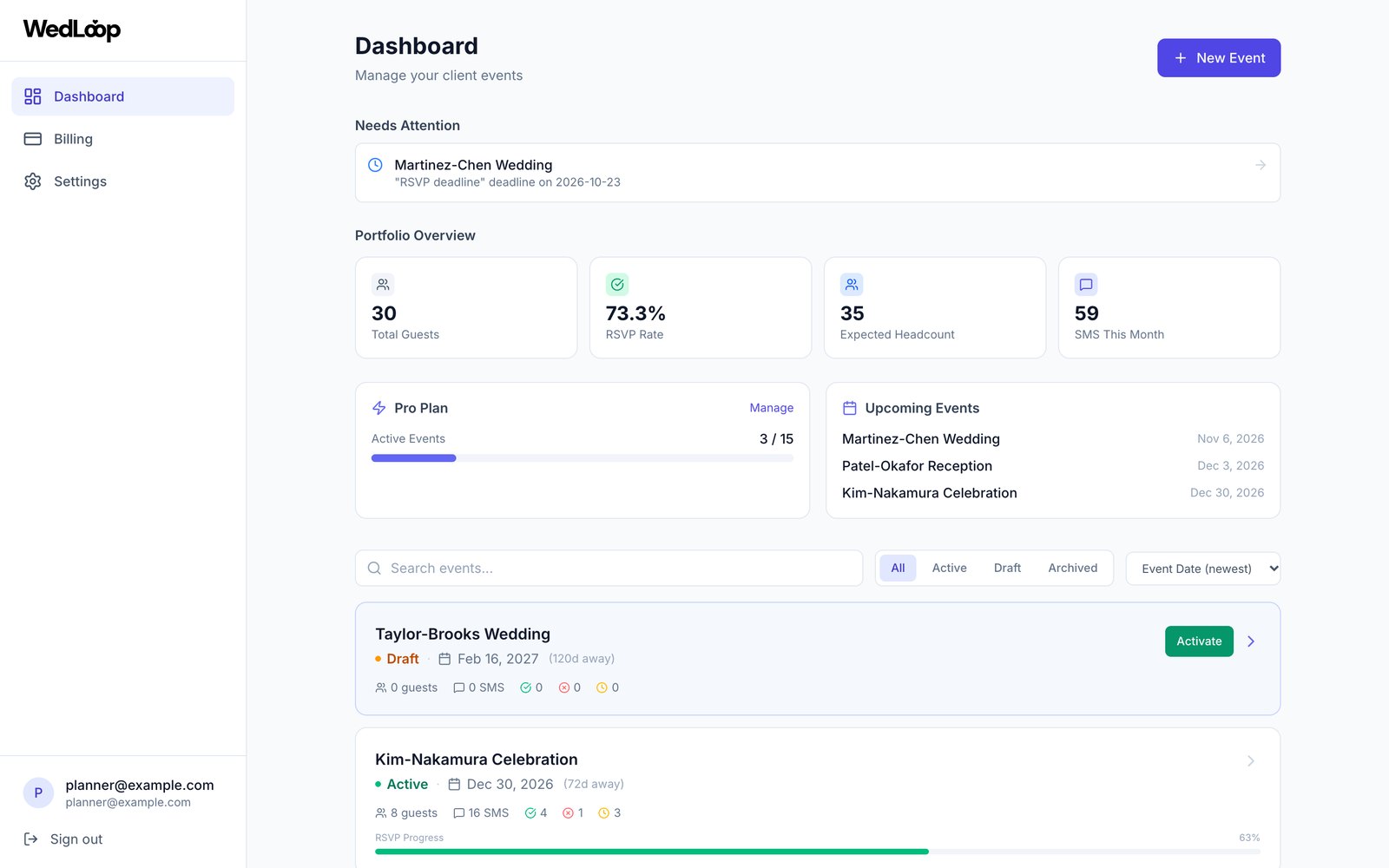
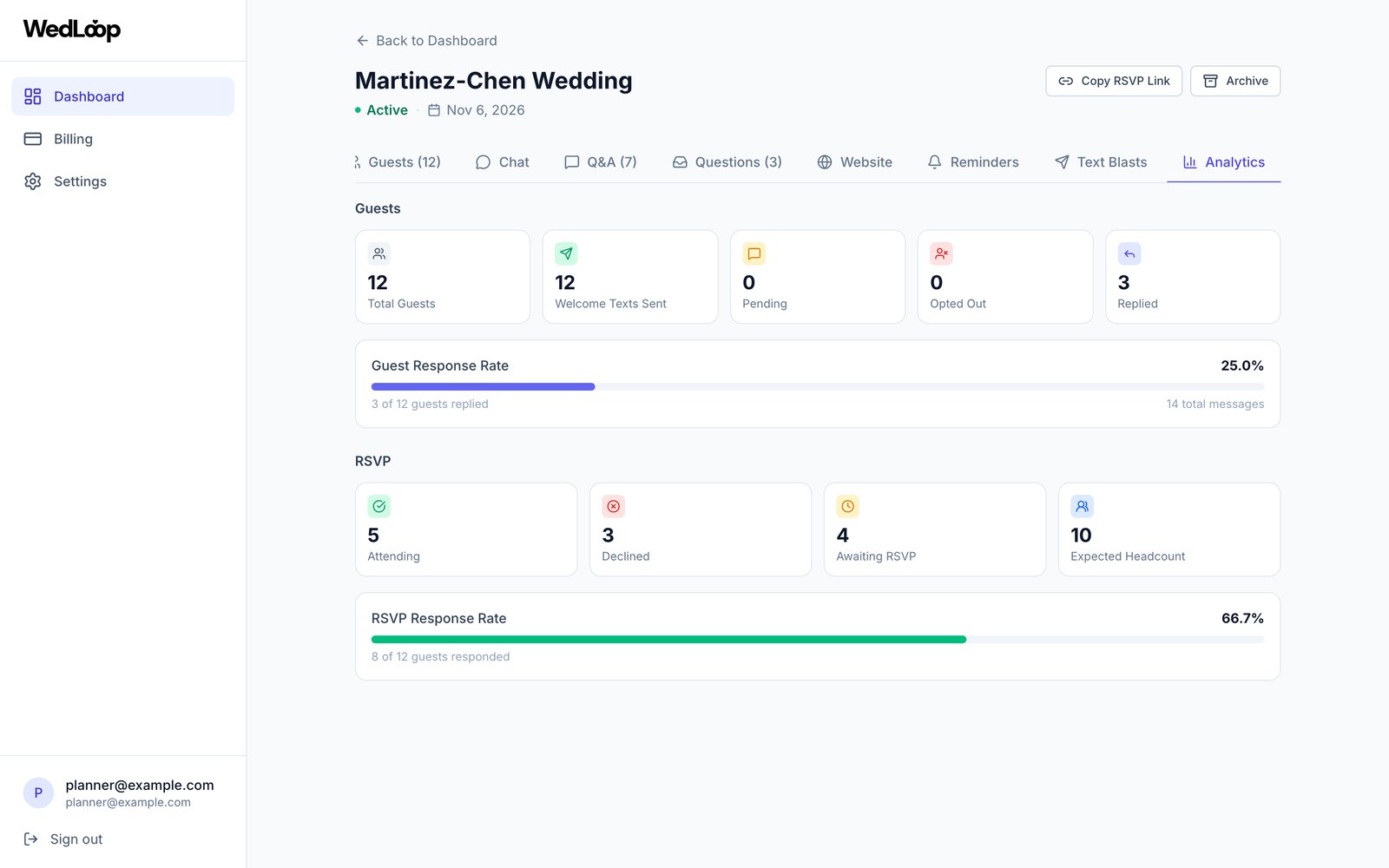
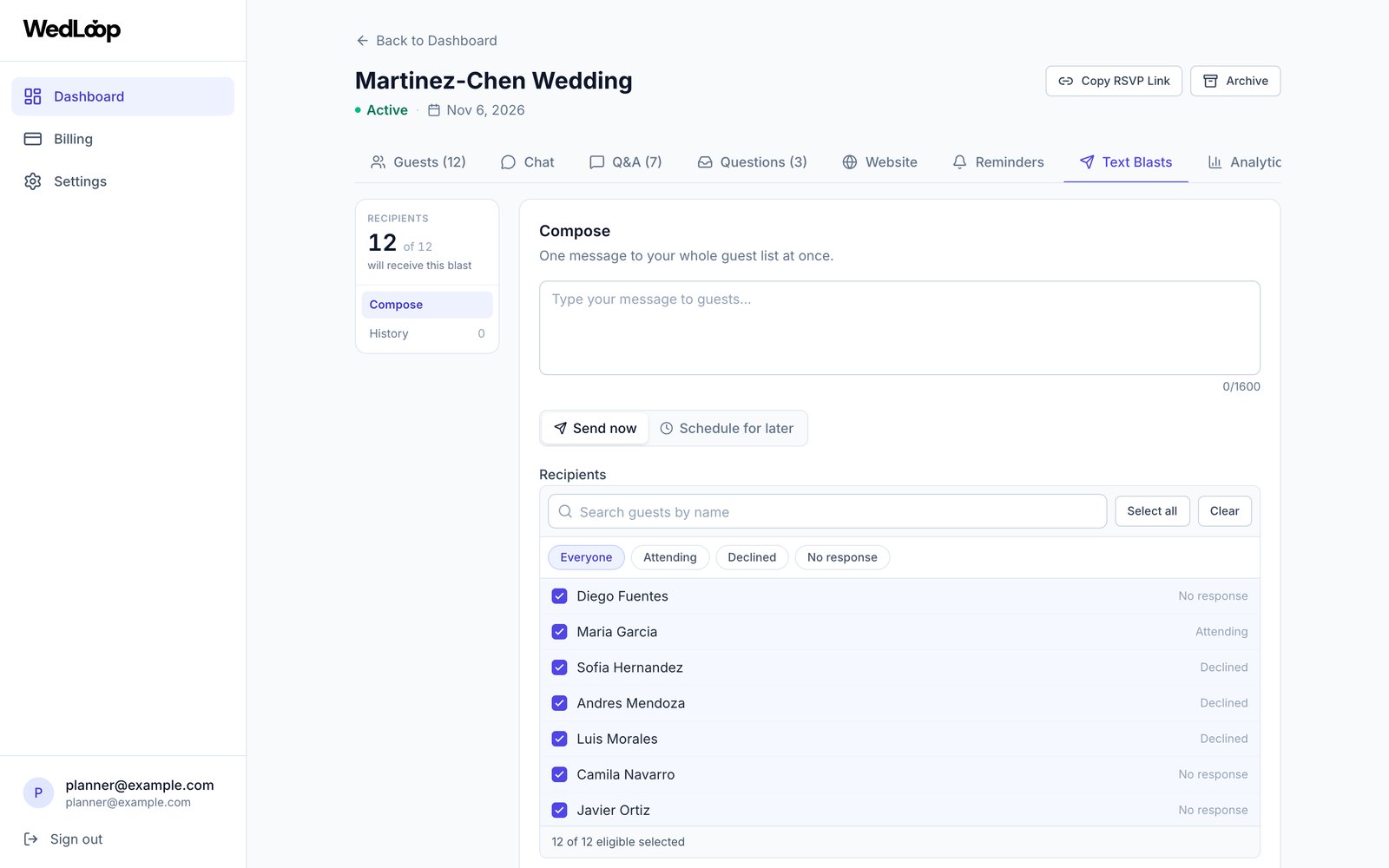
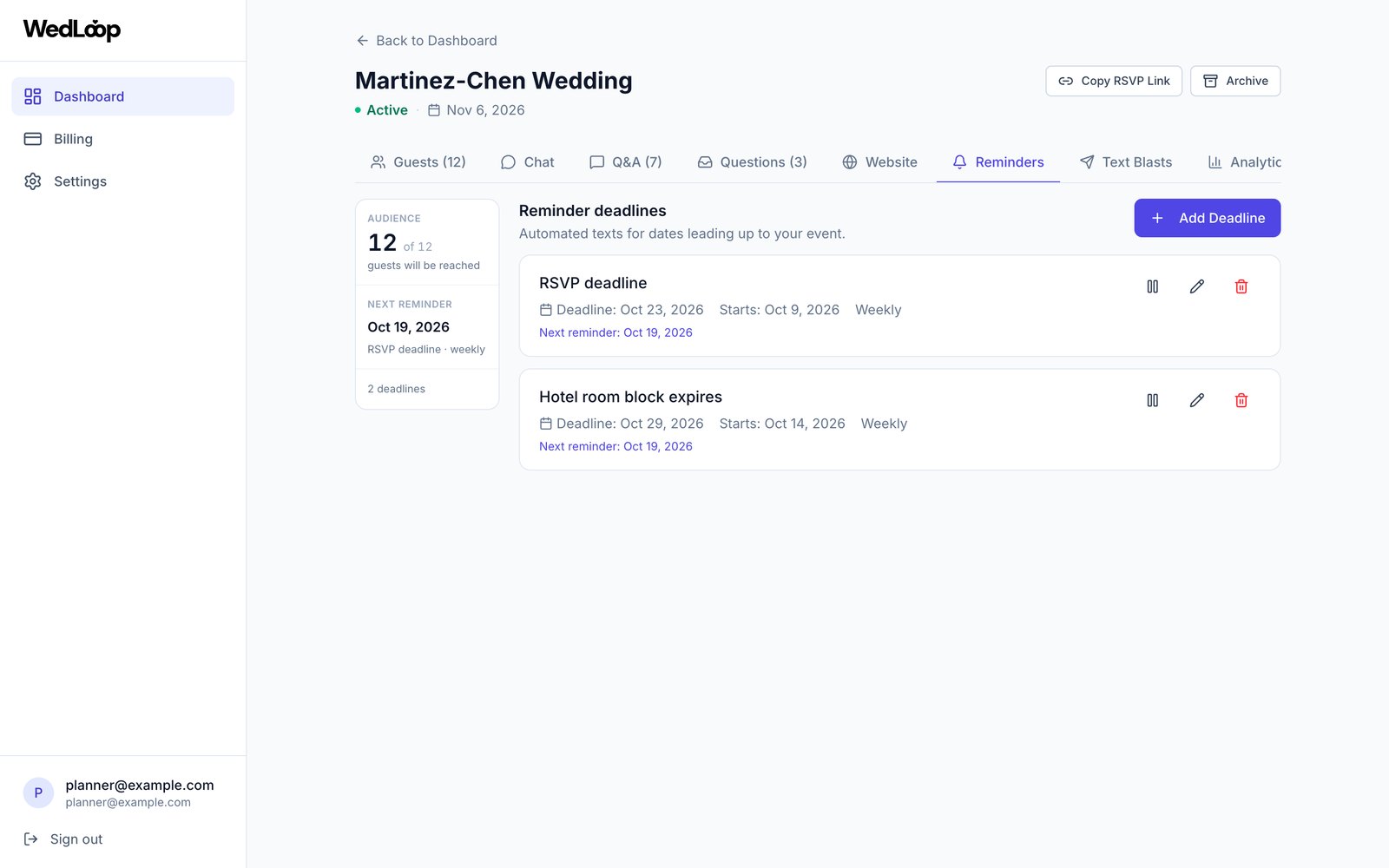
Screenshots are from a local build with demo events and guests.
Why I built it
I built WedLoop after a year of friends’ weddings, then my own wedding, experiencing as both a guest and a host what it’s like when seemingly everyone loses your wedding website (or just doesn’t look at it --- ever). I thought this would be the perfect use case for an agent, and that the medium of communication should be where it’s already happening: SMS.
How it works
A couple points WedLoop at their wedding website. It scrapes the site, proposes Q&A pairs as its knowledge base, takes the guest list, and texts every guest. Guests reply with questions and WedLoop answers.
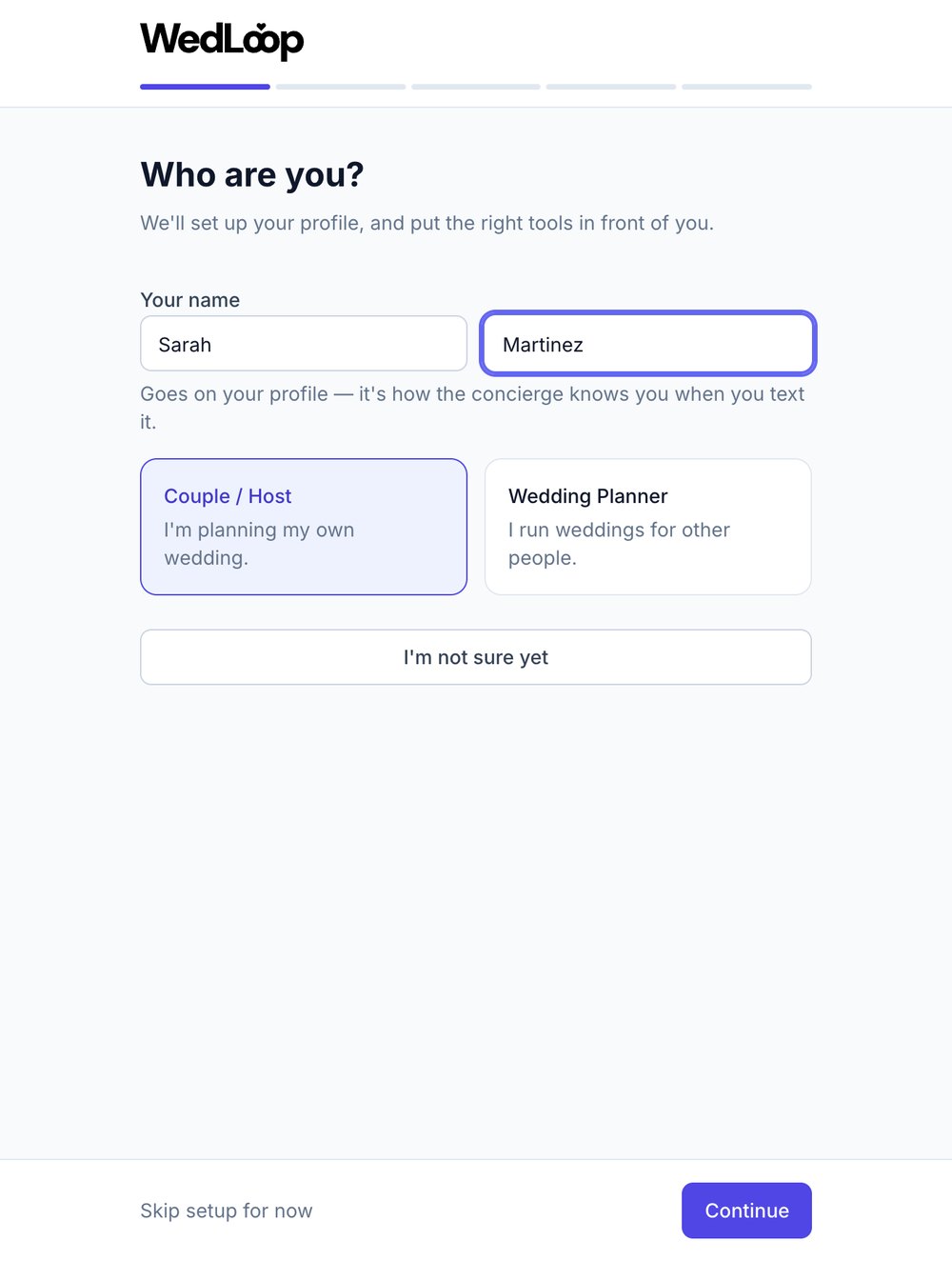
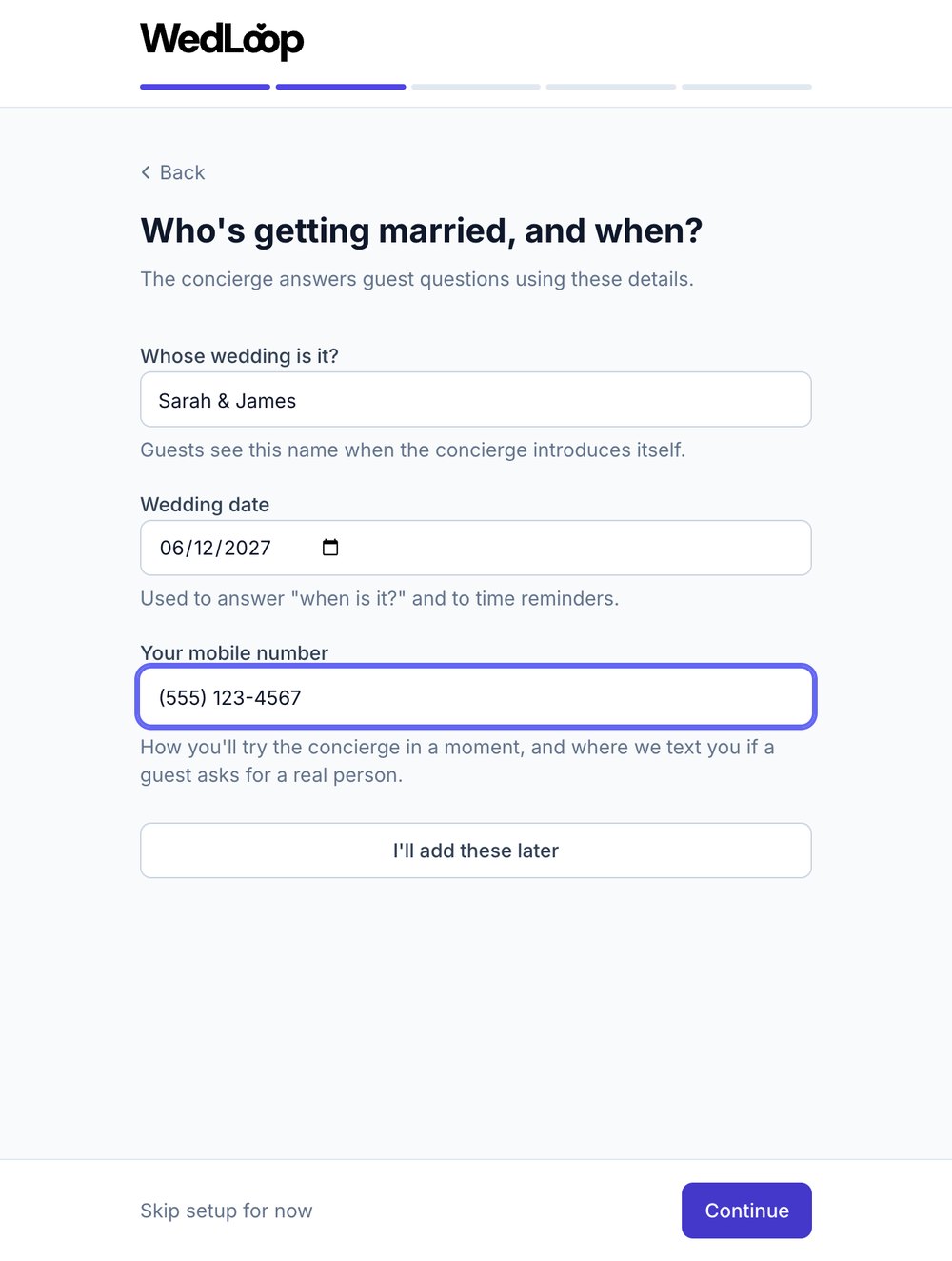
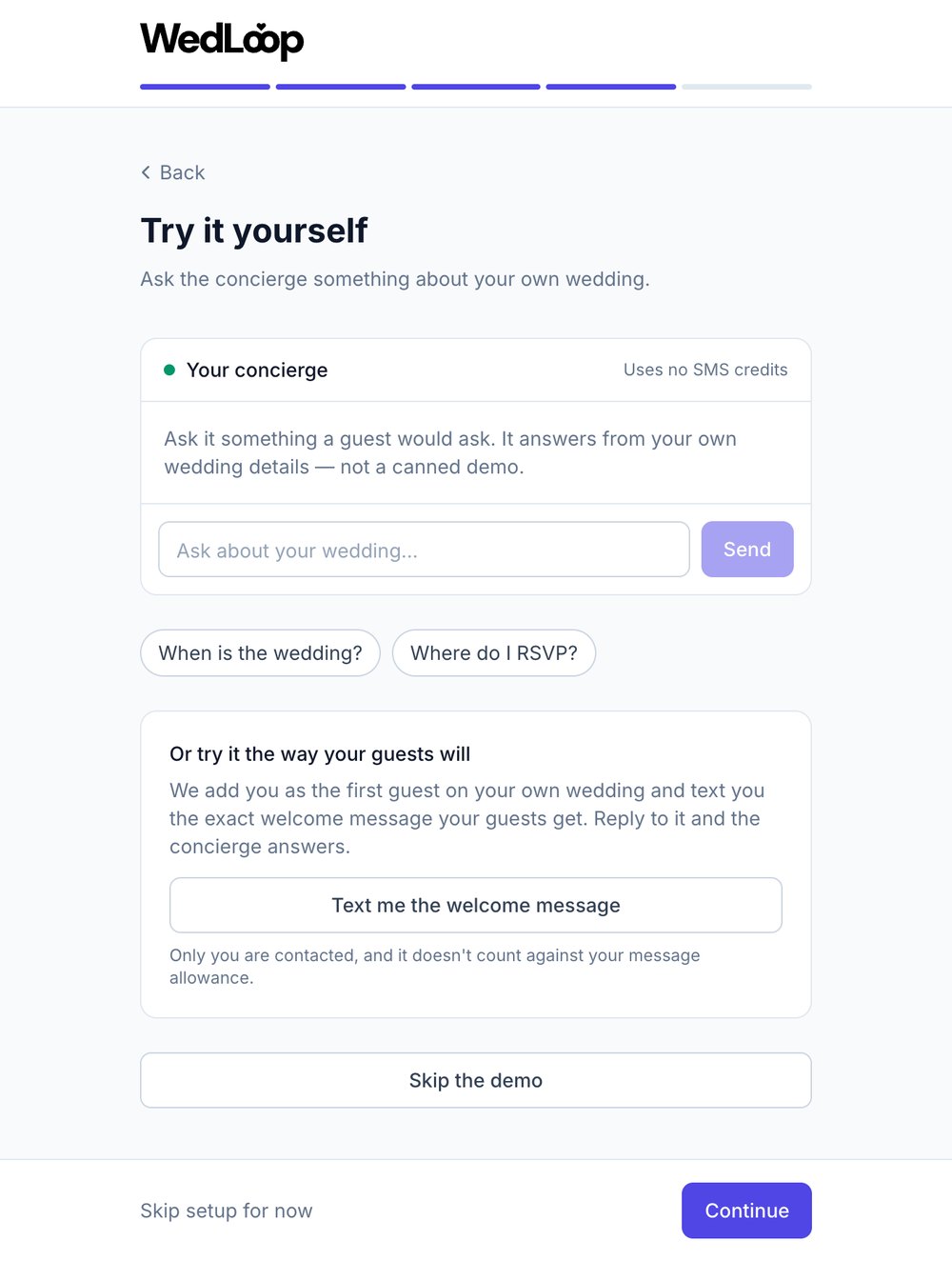
Every answer the agent drafts goes through a verifier before a guest sees it. If the draft fails, it goes back through the verifier loop, and if it still can’t pass by the time the retry limit runs out, the question escalates to a human: the host (the couple or their planner). The point of the loop is to keep the agent from hallucinating.
The host gets a text linking to the question in the portal and answers once. The reply goes to the guest through the agent and can be saved as knowledge, so the agent handles that question next time.
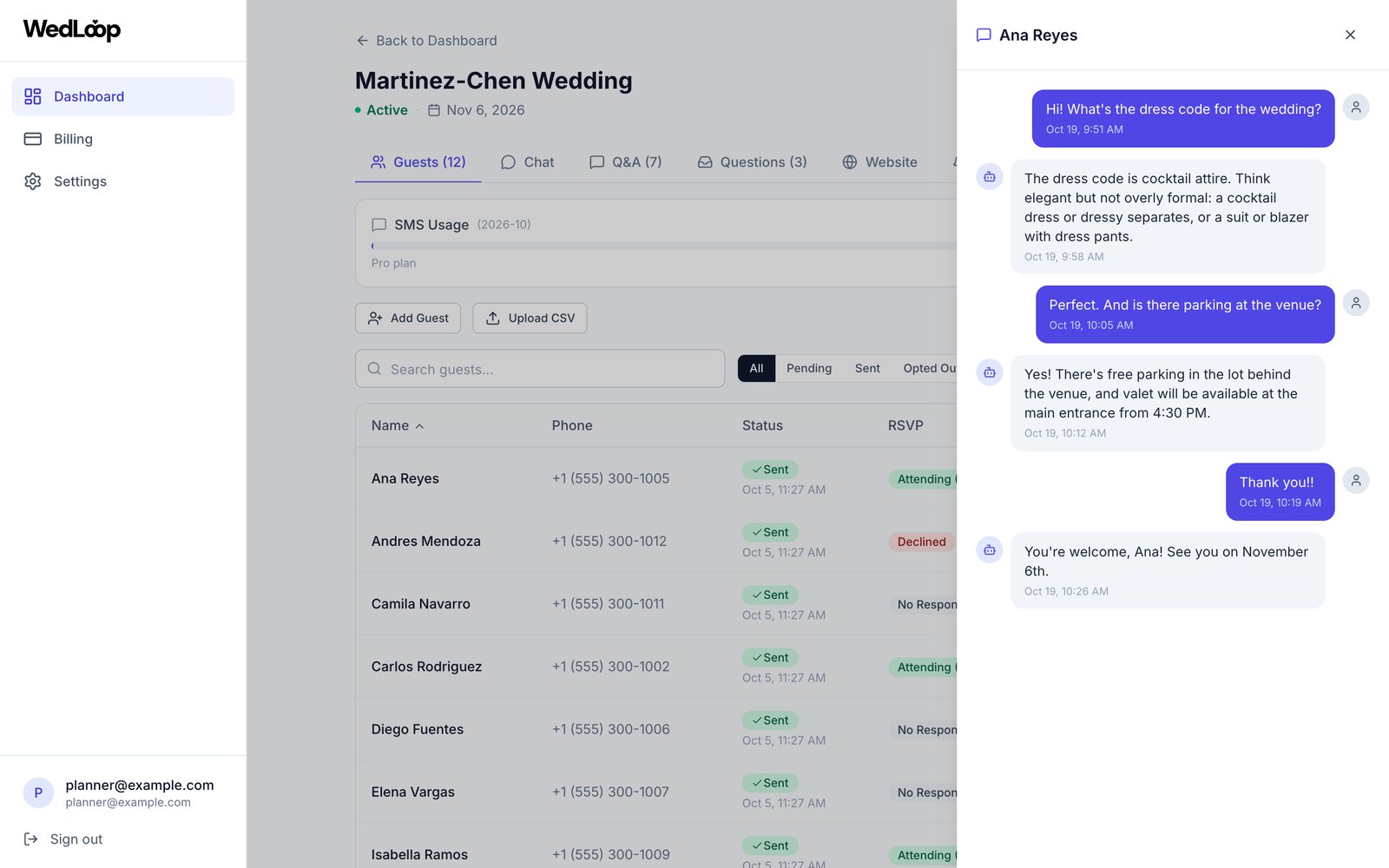
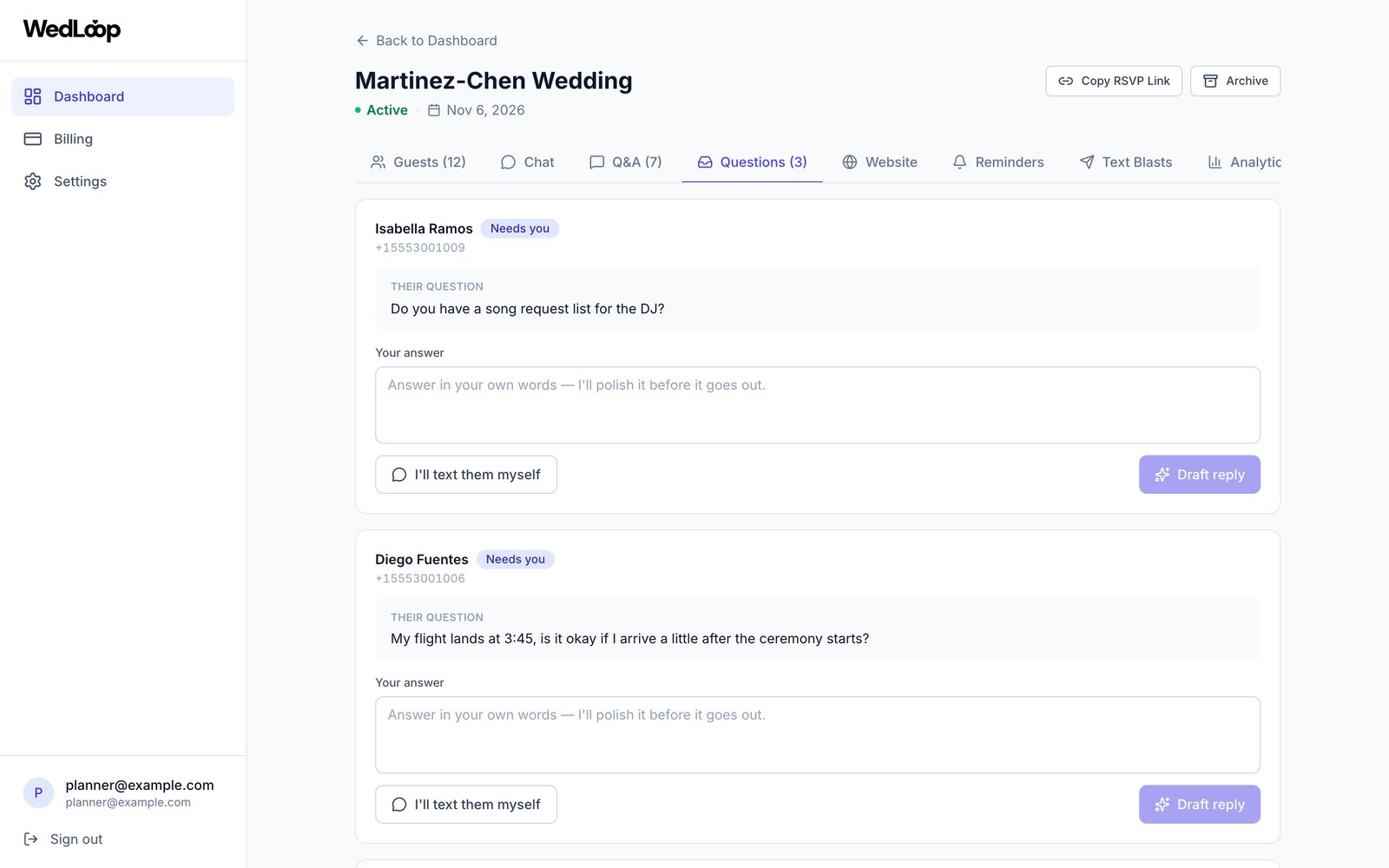
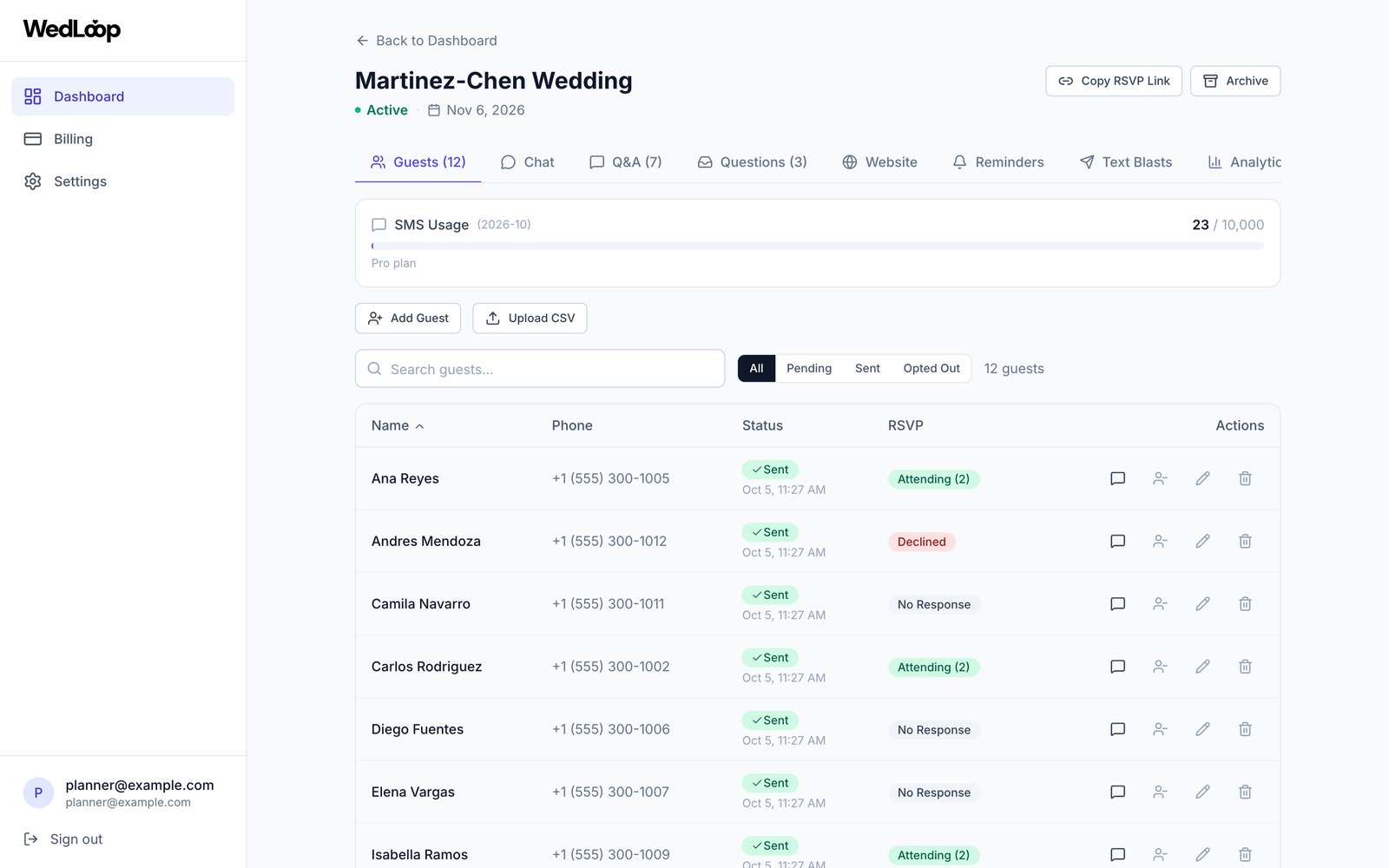
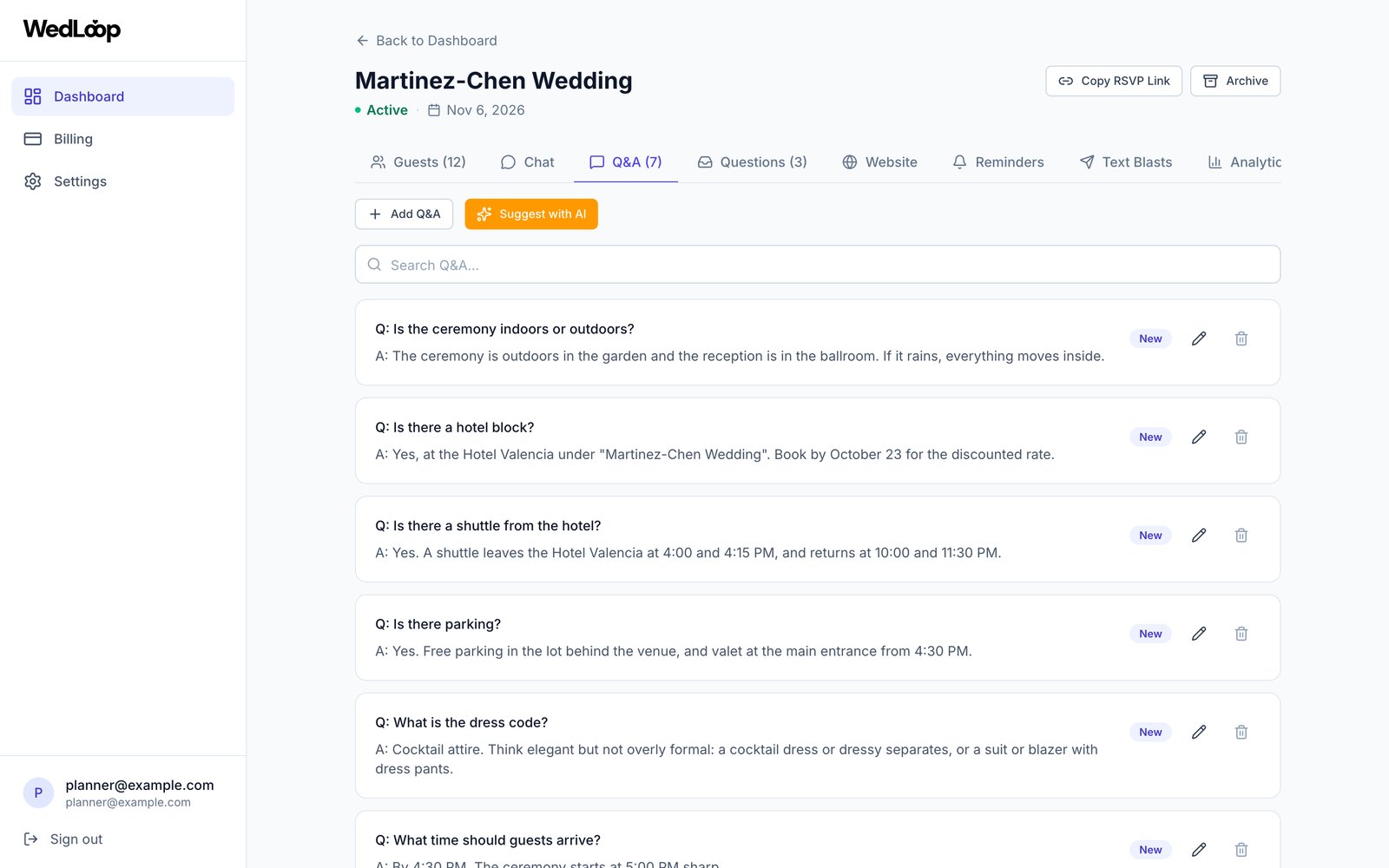
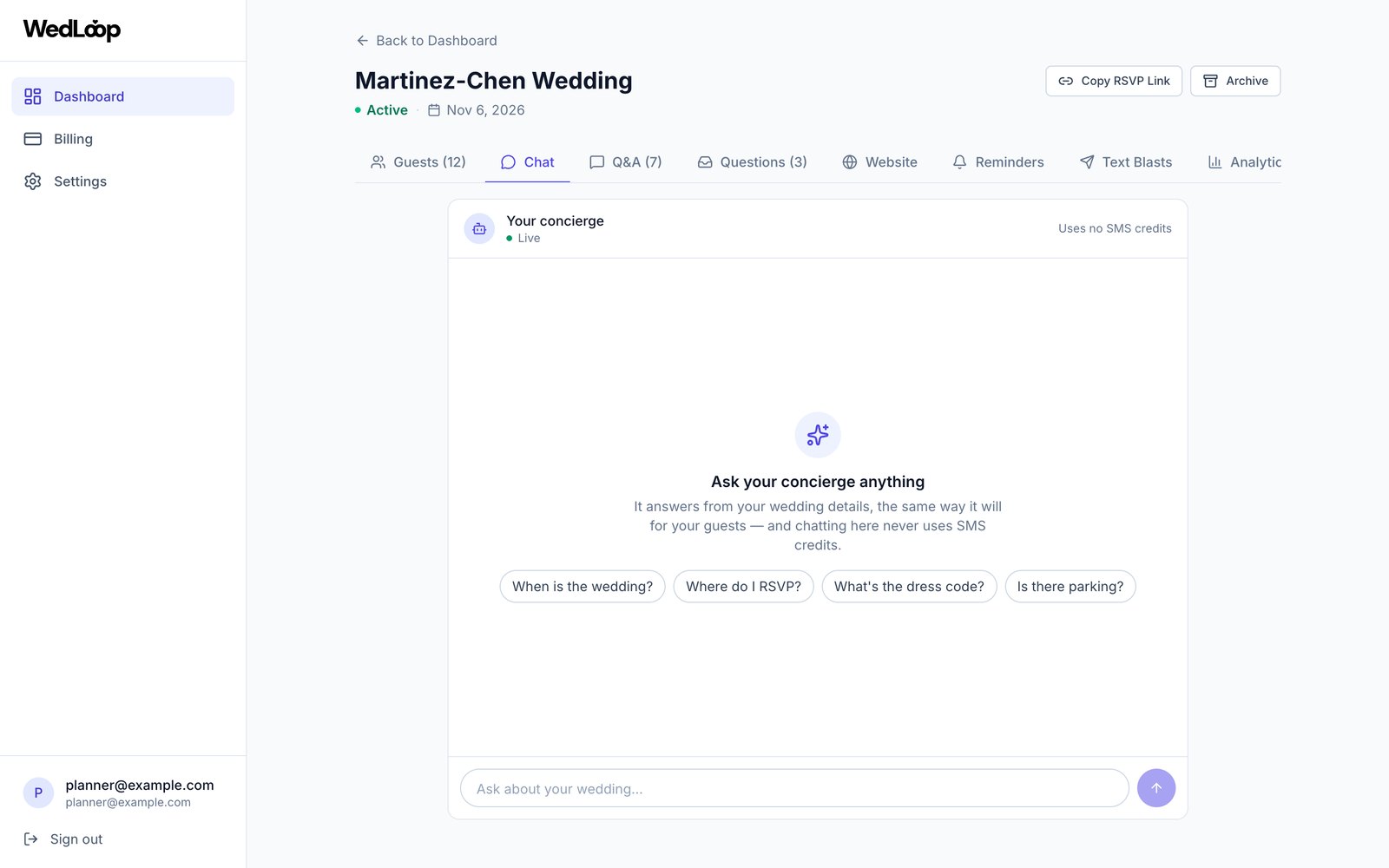
It also sends reminders for RSVP deadlines, hotel blocks, and travel dates.
Why text messages
Because that’s where people are already communicating. An 85-year-old grandma is not downloading another app and making an account. Your guests already aren’t looking at your website, so they’re never going to download an app. WedLoop has to meet them where they are.
What that cost me was flexibility. SMS is pretty basic and slow, and it can be unreliable because there are no delivery notifications. It also meant legal compliance work, and every text is money out of my pocket.
I also decided not to expand to WhatsApp, even though it’d be great for basically every country that isn’t the US. WhatsApp only lets us start a conversation if the guest has messaged us in the past 24 hours, and texting guests first (RSVP reminders, hotel blocks) is a core feature. That’s a serious blocker.
What I owned
Everything.
- Product and UI. Onboarding, the host dashboard, the escalation inbox, billing, and the public RSVP page, in Next.js, React, and Tailwind, built against a written design system (onboarding from Figma frames), with a Playwright end-to-end suite.
- The agent. LangGraph flows on Claude: a classifier that decides when a question needs a human, the verifier loop, and an eval suite that tests answer quality and consistency.
- Backend and infrastructure. Django and Celery on Cloud Run, the Next.js app on Vercel, Twilio, Stripe one-time and subscription billing, and Firebase Auth.
- Logging, monitoring, and alerting. Logs go to Google Cloud Logging, New Relic monitors the app, and both are hooked up to PagerDuty, so if something breaks I get paged 24/7.
- Shipping. CI that runs unit tests and agent evals on every change, and automatic frontend and backend deploys.
- Trust. Consent at setup, guest opt-out, delivery safeguards, and usage limits per tier. An agent that texts real people needs to stay quiet when it should.
What happened
One couple bought it and used it with 200+ guests and 2,000+ messages on one of the most important days of their lives. They loved it.
You’d be surprised how much it handled on its own: real questions, nonsense banter, and guests who thought they were texting a real concierge and asked it to congratulate the couple for them.
A number of questions did need escalating, though, like “Where is the bachelor house at the venue?” and “Does the venue allow indoor sparklers?” A couple would never put that on their website, but guests ask anyway. I’m using that data to suggest questions to couples up front, so they get fewer escalations.
Selling it
I also owned every founding engineer’s kryptonite: business development. That meant working a booth at wedding trade shows, cold-emailing and calling wedding planners, and running demos.
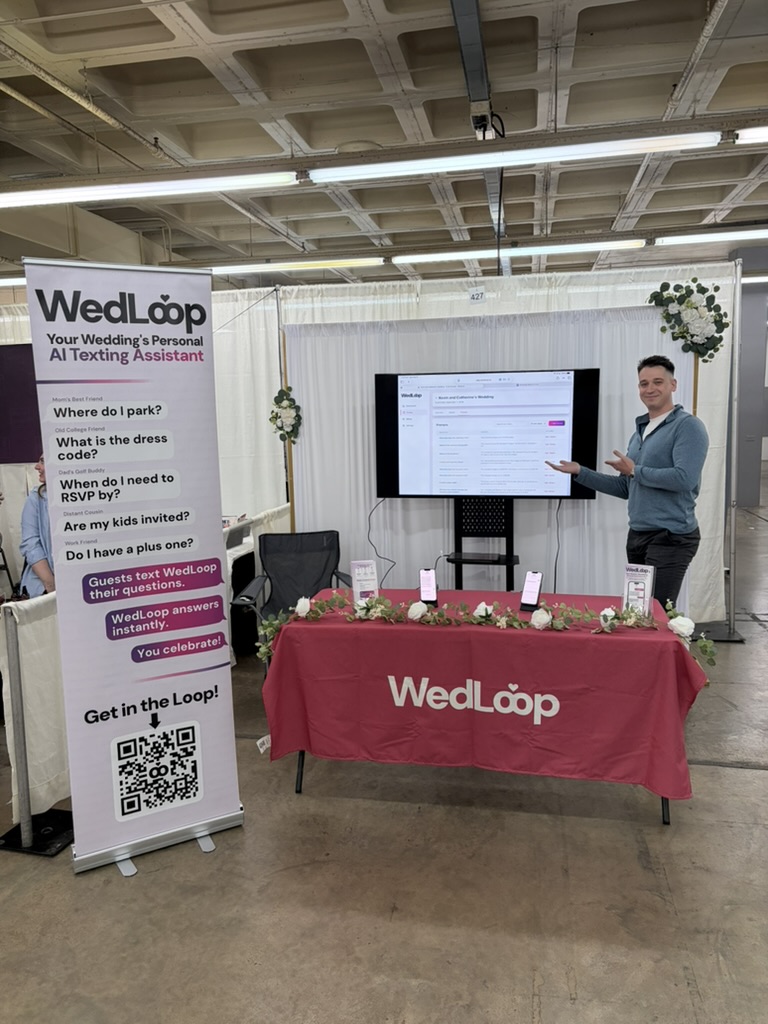
Mostly, it taught me rejection. It kind of stings when you care so much about what you built, but you get over it and used to it, and eventually it’s not embarrassing at all.
Planners have been hard to sell to because they don’t have a stake in handling the couple’s guest communication. And the concept is new enough that couples don’t want to be the first to use it, unless they’re really tech-forward.
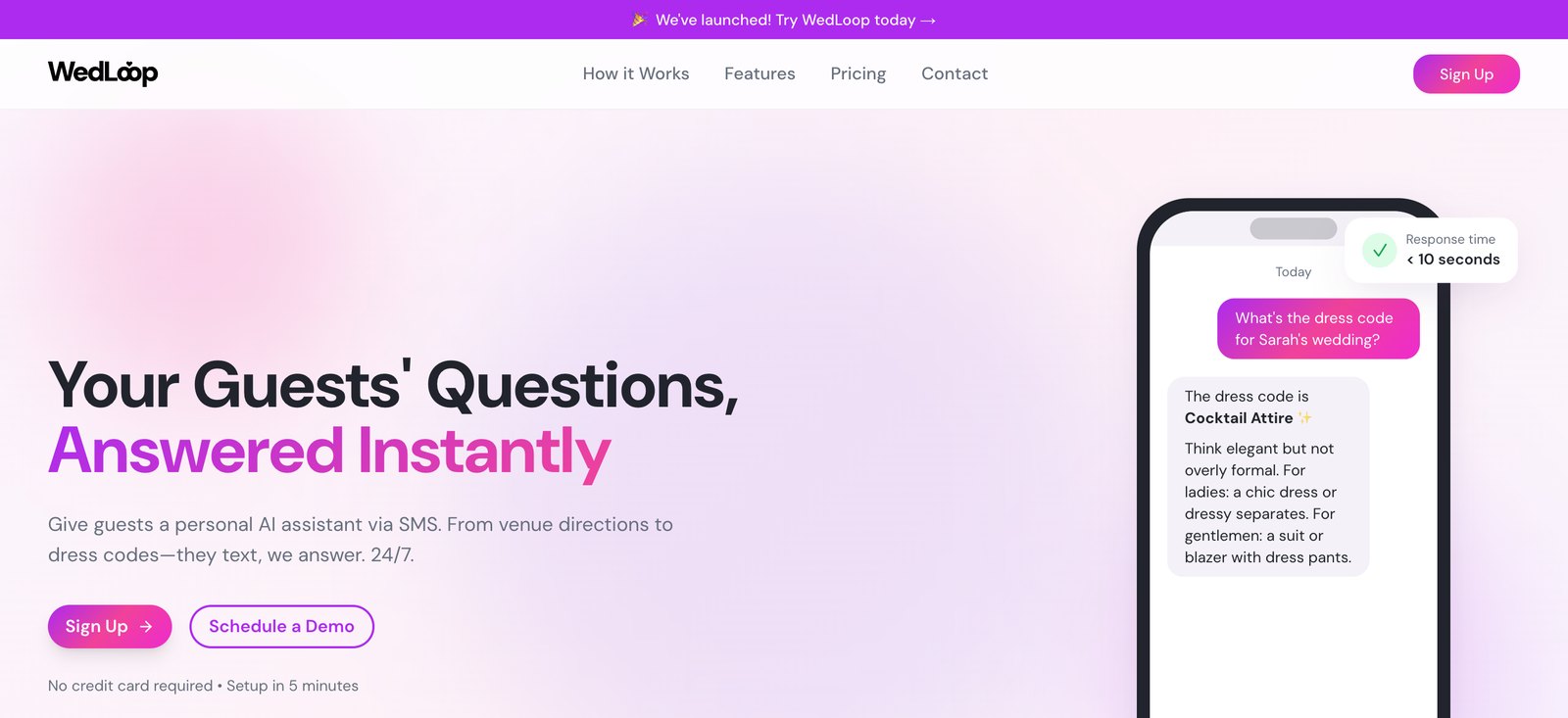
WedLoop is still in active development and being marketed, and it gets new signups every month.